
The global metal-air battery market is witnessing strong growth as industries and governments focus on sustainable energy solutions and advanced battery technologies. Valued at US$ 576.5 Mn in 2023, the market is projected to expand at a CAGR of 12.4% from 2024 to 2034, reaching approximately US$ 2.1 Bn by the end of 2034. The increasing demand for clean energy, rising adoption of electric vehicles (EVs), and rapid technological advancements in battery storage systems are key factors driving the expansion of this market.
Market Overview
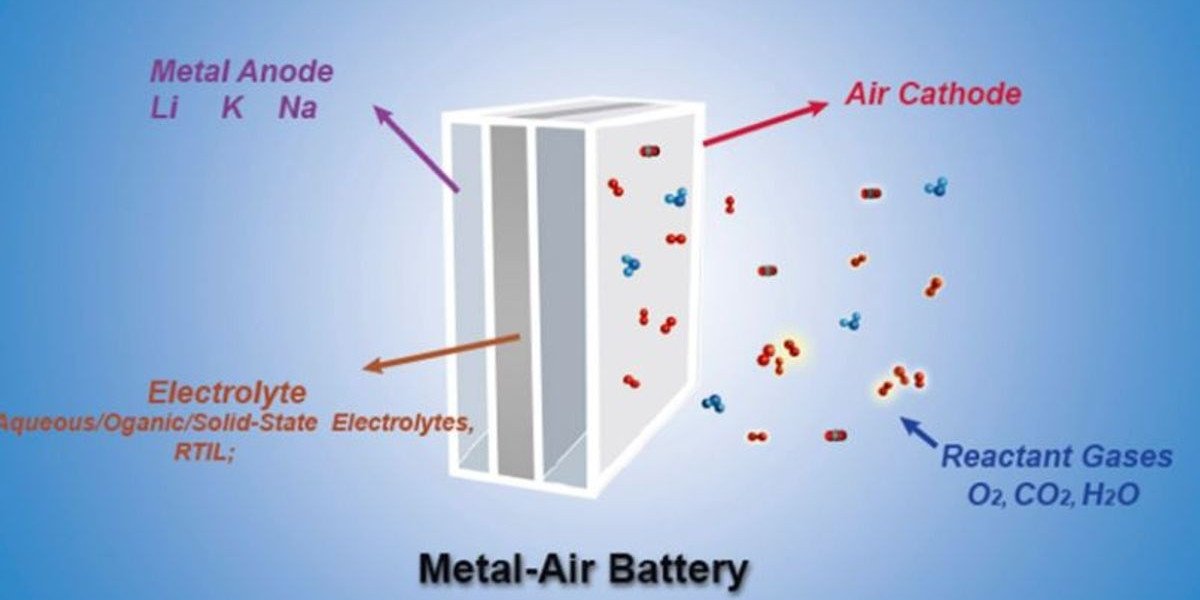
Metal-air batteries are advanced electrochemical energy storage systems that generate electricity through a reaction between a metal electrode and oxygen from the air. These batteries are widely considered a promising alternative to traditional lithium-ion batteries due to their high energy density, long operational life, and cost efficiency.
Metal-air batteries utilize metals such as lithium, zinc, aluminum, iron, sodium, and magnesium as anodes, while oxygen from the surrounding air acts as the cathode. Some commonly used types include zinc-air batteries, lithium-air batteries, aluminum-air batteries, and sodium-air batteries. These batteries are increasingly used in electric vehicles, consumer electronics, aerospace systems, medical devices, and remote power supply systems.
Key Drivers of Market Growth
One of the primary drivers of the metal-air battery market is the rapid depletion of fossil fuel resources. Global energy consumption continues to rise due to population growth, industrialization, and urbanization. Traditional energy sources are under pressure as reserves decline, prompting governments and energy companies to invest in alternative energy storage technologies.
Another significant factor fueling the market is the growing demand for sustainable and low-carbon energy solutions. Climate change and rising carbon emissions have pushed governments and industries to adopt cleaner energy technologies. Metal-air batteries offer a promising solution due to their high efficiency, non-toxic components, and relatively low production costs.
Compared with lithium-ion batteries, metal-air batteries have energy densities five to thirty times higher, making them ideal for applications requiring long operating times, such as electric vehicles and grid storage systems. Their ability to store large amounts of energy with minimal environmental impact is accelerating research and commercialization efforts worldwide.
Get Sample PDF Copy: https://www.transparencymarketresearch.com/sample/sample.php?flag=S&rep_id=81071
Market Trends and Technological Innovations
Continuous technological advancements are shaping the future of the metal-air battery industry. Researchers and manufacturers are focusing on developing lightweight batteries with higher energy density and longer life cycles to meet the needs of next-generation energy systems.
One major trend is the development of advanced catalysts to improve battery efficiency and reduce performance degradation during charge and discharge cycles. These innovations are expected to enhance the commercial viability of metal-air batteries.
Additionally, companies are exploring novel materials and sustainable production techniques to reduce manufacturing costs and improve scalability. Integration of metal-air batteries in renewable energy storage systems and electric vehicles is also gaining momentum.
Regional Outlook
Asia Pacific dominated the global metal-air battery market in 2023 and is expected to maintain its leading position during the forecast period. Rapid growth in the electric vehicle sector, increasing government investments in renewable energy technologies, and strong manufacturing capabilities are key factors supporting the region’s dominance.
Countries such as China, India, and Japan are actively investing in research and development of advanced battery technologies. The region’s expanding automotive industry and rising demand for clean energy storage solutions are further driving market growth.
North America is also emerging as a significant market due to increased investments in grid-scale energy storage projects and strong support for sustainable energy initiatives.
Key Industry Players
Leading companies in the metal-air battery market are focusing on developing next-generation energy storage systems and improving battery performance through technological innovations. Some of the prominent players include Phinergy, ABOUND, NantWorks LLC, Fuji Pigment Co., Ltd., Arconic, Sion Power Corporation, Log9 Materials, PPBC, ACTXE Limited, and GP Batteries International Limited.
These companies are investing heavily in research and development, strategic partnerships, and product innovations to strengthen their market presence.
Recent Developments
Recent technological breakthroughs highlight the growing interest in metal-air batteries. In April 2024, AZUL Energy introduced a paper-based magnesium-air battery activated by water. The innovative battery uses sustainable materials such as magnesium, paper, and carbon along with a rare-metal-free catalyst, making it environmentally friendly and efficient.
Similarly, Indian Oil Corporation increased its investment in Phinergy in February 2024, strengthening collaboration in the development of aluminum-air battery technologies.
Future Outlook
The future of the metal-air battery market looks highly promising as the world transitions toward renewable energy and electrified transportation systems. With ongoing research, improved battery materials, and growing investments from both public and private sectors, metal-air batteries could become a key component of next-generation energy storage solutions.
As demand for electric vehicles, renewable energy storage, and portable power systems continues to grow, metal-air batteries are expected to play a crucial role in shaping the global energy landscape over the next decade.