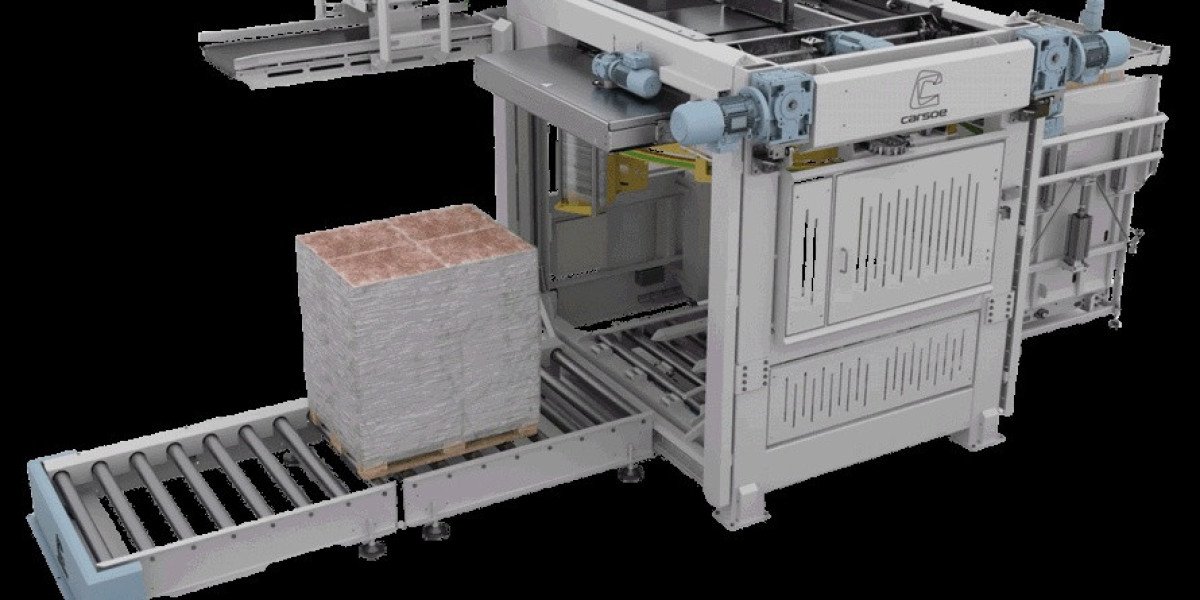

The global palletizer market is on a steady growth trajectory, reflecting the rapid transformation of logistics, warehousing, and manufacturing operations worldwide. Valued at US$ 3.1 Bn in 2023, the industry is projected to expand at a CAGR of 5.2% from 2024 to 2034, reaching an estimated US$ 5.4 Bn by the end of 2034. The rise in shipment volumes and the explosive expansion of e-commerce are key factors driving this growth.
Understanding Palletizers and Their Role
A palletizer is an automated material-handling system designed to sort, transfer, and stack products onto pallets in an organized manner, typically at the end of a production line. By forming stable and secure unit loads, palletizers make storage and transportation more efficient and economical.
Modern palletizing systems are often integrated into broader packaging lines that include labeling, wrapping, weighing, sorting, and metal detection. These systems improve load stability, enhance precision, and significantly boost operational speed. Instead of moving multiple individual items, businesses can transport consolidated unit loads, resulting in reduced handling time and improved logistics efficiency.
Rising Shipment Volumes Driving Demand
Global trade expansion and increasing shipment volumes have amplified the need for high-speed, reliable palletizing solutions. Automated palletizers outperform manual stacking by delivering faster loading and unloading times, improved accuracy, and enhanced safety.
By incorporating robotics, sensors, and advanced software, these machines stack products based on weight distribution and predefined patterns to maintain load stability and prevent damage. This optimization improves space utilization in warehouses and transportation vehicles, enabling businesses to move more goods per trip.
Industries such as chemicals, pharmaceuticals, food & beverages, and retail are increasingly adopting pallet stackers to enhance safety, flexibility, and operational efficiency. The demand for automation is particularly strong among companies aiming to reduce labor costs while improving productivity and minimizing workplace accidents.
Get Sample PDF Copy: https://www.transparencymarketresearch.com/sample/sample.php?flag=S&rep_id=77682
E-commerce Expansion Accelerating Market Growth
The rapid rise of e-commerce has fundamentally reshaped warehouse operations. With online shopping continuing to gain popularity, order volumes have surged, creating the need for highly efficient fulfillment systems.
Automated palletizing systems play a crucial role in managing diverse product types and fluctuating order volumes. E-commerce warehouses require flexibility to handle varying package sizes, shapes, and weights — a challenge that robotic palletizers are well-equipped to address.
Layer palletizers and robotic arm systems offer precision stacking, reduce handling errors, and ensure products remain undamaged during shipment. These capabilities help e-commerce platforms meet rising consumer expectations for fast, accurate, and damage-free deliveries.
As businesses prioritize speed, quality control, and labor optimization, palletizing automation is becoming an indispensable component of modern fulfillment centers.
Technological Advancements Reshaping the Industry
The palletizer market is witnessing continuous innovation. Companies are developing compact, flexible, and space-saving robotic palletizers with user-friendly programming interfaces. These machines enable operators to quickly design precise pallet patterns for bags, boxes, crates, and other product types.
High-speed palletizing systems with optimized layouts and lower capital costs are gaining traction. Additionally, Robotics-as-a-Service (RaaS) models are emerging, making automation more accessible to small and mid-sized enterprises by reducing upfront investment barriers.
Hybrid palletizers that combine the benefits of conventional and robotic systems are also gaining popularity, offering greater versatility across applications.
Regional Insights: North America Leading the Way
North America held a dominant share of the global palletizer market in 2023. Factors such as strong retail presence, rising disposable income, a fast-paced consumer lifestyle, and significant investment in automation technologies have supported regional growth.
The increasing demand for efficient logistics and advanced transportation solutions further strengthens the region’s position. Businesses across food & beverages, pharmaceuticals, and chemicals sectors are adopting advanced palletizers to ensure timely and safe product delivery.
Competitive Landscape
The market features several prominent global players, including ABB, FANUC CORPORATION, KUKA AG, BEUMER GROUP, and Honeywell International Inc.. These companies are focused on launching innovative robotic palletizers, improving stacking capabilities, and expanding their global footprint.
The Road Ahead
As supply chains grow more complex and labor shortages persist in many regions, automation will remain central to logistics transformation. The palletizer market’s projected growth to US$ 5.4 Bn by 2034 reflects its critical role in enabling efficient, scalable, and cost-effective material handling.
In an era defined by speed, precision, and digital integration, palletizers are no longer optional — they are essential infrastructure for the future of global trade and e-commerce.