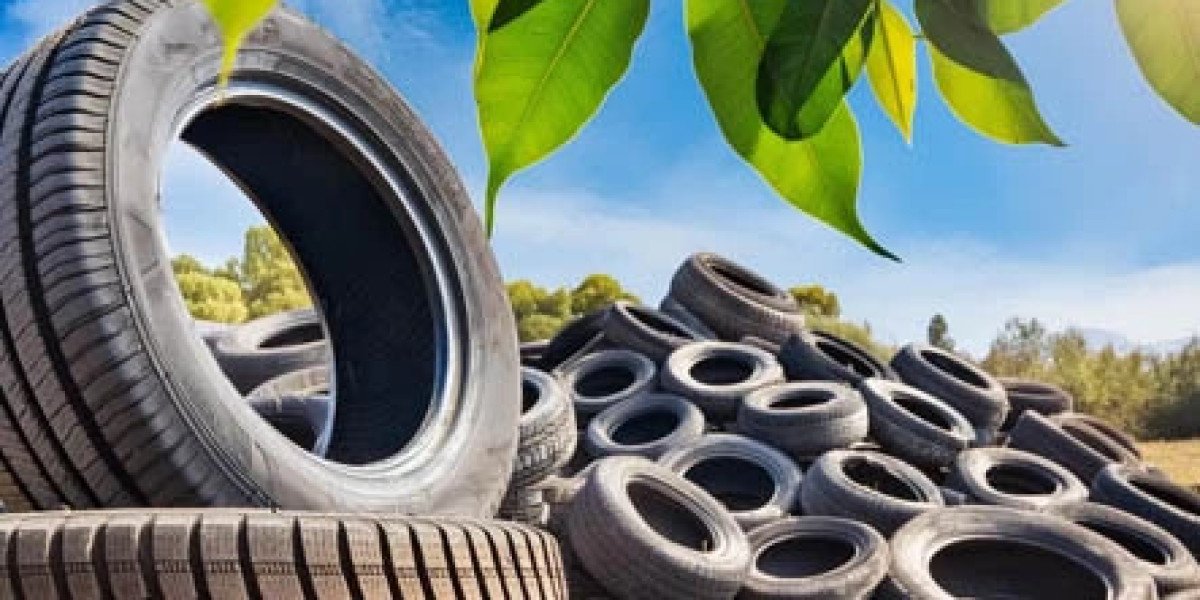

The global tire recycling downstream products market is steadily gaining traction as sustainability mandates, circular economy initiatives, and rising volumes of end-of-life tires (ELTs) reshape the waste management landscape. Valued at US$ 6.8 Bn in 2024, the market is projected to expand at a CAGR of 4.2% from 2025 to 2035, reaching approximately US$ 10.7 Bn by the end of the forecast period. Growing regulatory pressure, advancements in recycling technologies, and increasing demand for eco-friendly construction and industrial materials are collectively driving this expansion.
Market Overview
Tire recycling downstream products refer to valuable materials recovered from scrap tires through processes such as shredding, pyrolysis, devulcanization, cryogenic treatment, and mechanical processing. These processes convert waste tires into reusable products including crumb rubber, tire-derived aggregate (TDA), recovered carbon black (rCB), reclaimed rubber, tire-derived fuel (TDF), pyrolysis oil, recycled steel, rubber powder, and fiber.
These downstream materials are widely used across industries such as road construction, cement manufacturing, pulp and paper mills, utility boilers, sports complexes, and rubber manufacturing. The increasing shift toward sustainable infrastructure and alternative fuels has significantly strengthened demand for recycled tire products.
Regulatory Push and Circular Economy Initiatives
One of the strongest growth drivers for the market is the global regulatory push toward circular economy frameworks. Extended Producer Responsibility (EPR) regulations in Europe, North America, and Asia ensure systematic tire collection and recycling, creating a steady feedstock supply for recyclers.
Several U.S. states and European countries mandate or incentivize the use of crumb rubber-modified asphalt in road construction. Rubberized asphalt improves durability, reduces road noise, and enhances skid resistance, making it a preferred sustainable material for public infrastructure projects.
Furthermore, decarbonization goals are encouraging industries to adopt tire-derived fuel (TDF) and pyrolysis oil as cost-effective alternatives to conventional fossil fuels. Cement kilns, power plants, and industrial boilers increasingly rely on these alternatives to reduce carbon emissions while maintaining operational efficiency.
For More Details Get Sample PDF: https://www.transparencymarketresearch.com/sample/sample.php?flag=S&rep_id=72929
Advancements in Recycling Technologies
Technological innovation is reshaping the tire recycling ecosystem. Traditional TDF markets are stabilizing, while advanced pyrolysis and devulcanization technologies are unlocking higher-value applications. Emerging innovations are enabling improved recovery of rCB, ultra-fine rubber powders, and upgraded pyrolysis oils with better purity and performance characteristics.
Companies such as Scandinavian Enviro Systems AB and Evonik Industries are contributing to technological advancements in recovered carbon black and sustainable materials. Similarly, GENAN HOLDING A/S and Liberty Tire Recycling are leaders in crumb rubber and tire-derived aggregate production.
Recovered carbon black (rCB), when refined and pelletized, is increasingly accepted as a sustainable substitute for virgin carbon black in tire manufacturing, plastics compounding, and specialty coatings. This shift supports manufacturers’ carbon reduction targets while lowering material costs.
Crumb Rubber: A Key Revenue Segment
Among product segments, crumb rubber remains one of the most prominent contributors to market revenue. It is widely utilized in rubberized asphalt, molded rubber goods, playground surfaces, sports flooring, mats, and sealants. Rising raw material prices in the rubber and polymer industries have accelerated adoption of crumb rubber as a cost-effective and sustainable alternative.
Regional Insights
Asia Pacific leads the global market, accounting for an estimated 38.7% share. Rapid vehicle ownership growth, increasing ELT accumulation, and cost-efficient recycling infrastructure in countries such as China and India are major growth drivers. Government support for sustainable road construction and industrial fuel alternatives further strengthens regional demand.
North America follows closely, supported by mature collection systems, regulatory backing for rubber-modified asphalt, and growing investments in rCB technology partnerships.
Competitive Landscape
Key market participants—including Ragn-Sells Group, Lehigh Technologies, Inc., and Bolder Industries—are focusing on capacity expansion, technology upgrades, and strategic collaborations with tire OEMs and cement manufacturers.
Overall, the tire recycling downstream products market presents stable growth potential, underpinned by regulatory momentum, sustainability targets, and technological advancements that are transforming waste tires into high-value industrial resources.