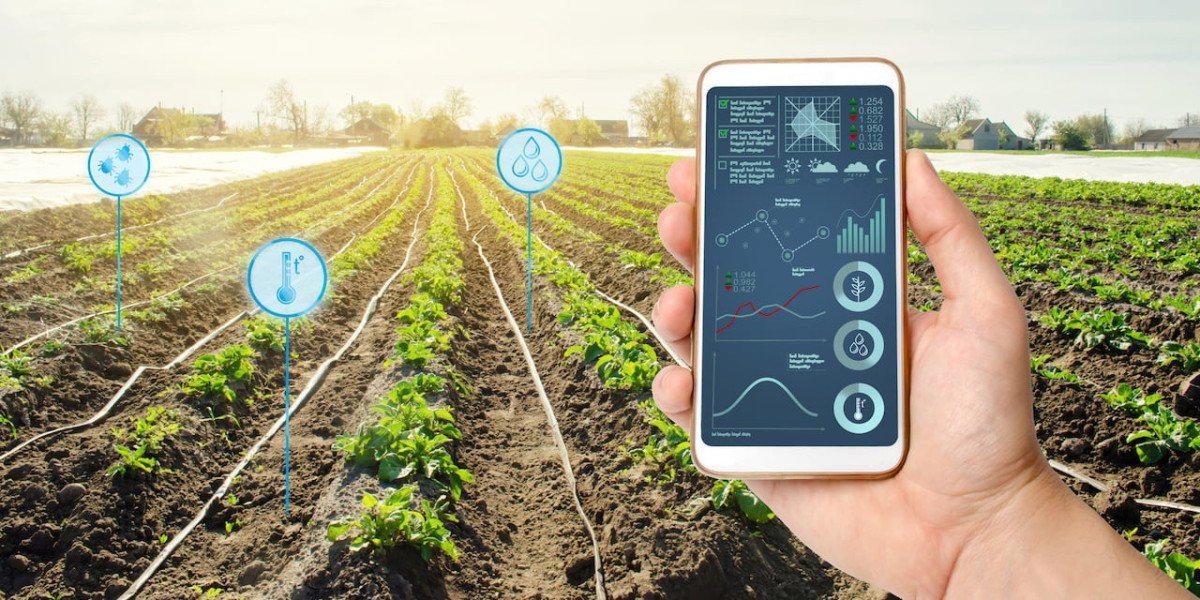

The global technology landscape is rapidly evolving, and at the heart of this transformation lies the Internet of Things (IoT)—a network of connected devices powered by intelligent sensing capabilities. Among the critical components enabling this ecosystem are IoT sensors, which are witnessing significant growth as industries increasingly embrace automation, data-driven decision-making, and smart infrastructure.
According to recent market insights, the IoT Sensors Market was valued at US$ 106.6 billion in 2023 and is projected to reach US$ 258.0 billion by 2034, expanding at a robust CAGR of 7.7% from 2024 to 2034. This impressive growth reflects the rising demand for real-time data, increased adoption of Industry 4.0 technologies, and the continuous evolution of smart devices across industries.
Understanding IoT Sensors and Their Role
IoT sensors are devices designed to collect environmental and physical data—such as temperature, pressure, humidity, motion, and light—and convert them into electrical signals for analysis and communication. These sensors enable seamless interaction between physical systems and digital platforms, forming the backbone of connected ecosystems.
They are widely used across various industries, including consumer electronics, healthcare, automotive, manufacturing, agriculture, and transportation. Whether it’s monitoring patient health remotely, optimizing industrial equipment performance, or enabling smart home automation, IoT sensors are essential for real-time data collection and system intelligence.
One of the key advancements in this space is the shift toward wireless IoT sensors, which offer flexibility, easy installation, and reduced infrastructure costs. These sensors eliminate the limitations of wired systems and are increasingly being adopted for applications such as asset tracking, environmental monitoring, and logistics management.
Market Drivers Fueling Growth
? Surge in Demand for Smart Sensors
A major factor driving the IoT sensors market is the growing demand for smart sensors—devices capable of not only sensing but also processing and transmitting data autonomously. These sensors provide high accuracy and real-time insights, making them indispensable in modern industrial environments.
In manufacturing, smart sensors play a crucial role in predictive maintenance, helping companies monitor equipment health and prevent unexpected failures. For instance, temperature sensors are widely used in smart factories to detect anomalies in machinery and maintain optimal operating conditions.
As the number of smart factories continues to rise globally, the demand for intelligent sensing solutions is expected to grow exponentially.
? Rise in Industry 4.0 Investments
The increasing adoption of Industry 4.0 is another key driver accelerating the IoT sensors market. Industry 4.0 focuses on integrating digital technologies such as IoT, artificial intelligence (AI), robotics, and cloud computing into manufacturing processes.
IoT sensors play a central role in this transformation by enabling real-time data collection, system optimization, and automation. Sensors such as pressure sensors, proximity sensors, infrared sensors, and level sensors are widely used to monitor industrial operations and improve efficiency.
Additionally, the growing use of autonomous systems like drones and mobile robots is boosting demand for advanced sensor technologies, including Inertial Measurement Units (IMUs). These systems rely on components such as accelerometers, gyroscopes, and magnetometers for navigation and control.
Post-pandemic, companies are investing heavily in digital transformation to build resilient and sustainable supply chains, further driving the adoption of IoT sensors.
Emerging Trends Shaping the Market
The IoT sensors market is also witnessing several transformative trends:
- Edge Computing Integration: Companies are developing edge-based architectures that process data closer to the source, reducing latency and enabling faster decision-making.
- AI-Enabled Sensors: Integration of artificial intelligence is enhancing sensor capabilities, allowing for predictive analytics and adaptive responses.
- Miniaturization & Energy Efficiency: Sensors are becoming smaller, more energy-efficient, and cost-effective, expanding their use in wearable devices and portable applications.
- Industry 5.0 Evolution: The shift toward Industry 5.0—where humans collaborate with intelligent machines—is expected to create new opportunities for advanced sensor technologies.
Regional Insights: Asia Pacific Leads
From a regional perspective, Asia Pacific dominates the global IoT sensors market, holding the largest share in 2023. This leadership is driven by rapid industrialization, increasing technological investments, and strong government support for digital transformation.
Countries such as India, China, Japan, and South Korea are at the forefront of adopting IoT and automation technologies. Notably, manufacturers in India are allocating a significant portion of their budgets toward technology investments, including IoT, AI, and machine learning.
Government initiatives aimed at strengthening Industry 4.0 ecosystems—such as investments in skill development and smart manufacturing—are further accelerating market growth in the region.
Competitive Landscape and Key Players
The IoT sensors market is highly competitive, with several global players focusing on innovation and strategic partnerships to strengthen their market position. Leading companies include:
- ABB Ltd.
- Analog Devices
- Bosch Sensortec GmbH
- Broadcom
- Honeywell International
- Infineon Technologies
- Murata Manufacturing Co., Ltd.
- NXP Semiconductors
- STMicroelectronics N.V.
- Texas Instruments
These companies are investing heavily in research and development, particularly in areas such as edge computing, AI integration, and next-generation sensor technologies.
Recent developments highlight the pace of innovation in the industry. For example, new smart sensor platforms are being introduced to enhance motion tracking and wearable applications, while partnerships are being formed to develop decentralized edge computing solutions for IoT ecosystems.
The Road Ahead
The future of the IoT sensors market looks promising, with expanding applications across industries and continuous technological advancements. As businesses increasingly rely on data to drive decisions, the demand for accurate, real-time sensing solutions will continue to rise.
However, challenges such as data security, interoperability, and high initial deployment costs must be addressed to unlock the full potential of IoT sensors.
In conclusion, IoT sensors are not just enabling connectivity—they are redefining how industries operate, innovate, and grow. As the world moves toward a more connected and intelligent future, IoT sensors will remain at the core of this digital revolution, powering everything from smart cities to autonomous systems.
The question is no longer about adoption, but about how quickly organizations can leverage IoT sensors to gain a competitive edge in an increasingly data-driven world.
Media Contact:
Abhishek Budholiya
Transparency Market Research Inc.
Tel: +1-518-618-1030
USA – Canada Toll Free: 866-552-3453
Website: https://www.transparencymarketresearch.com
Sales Inquiries: sales@transparencymarketresearch.com