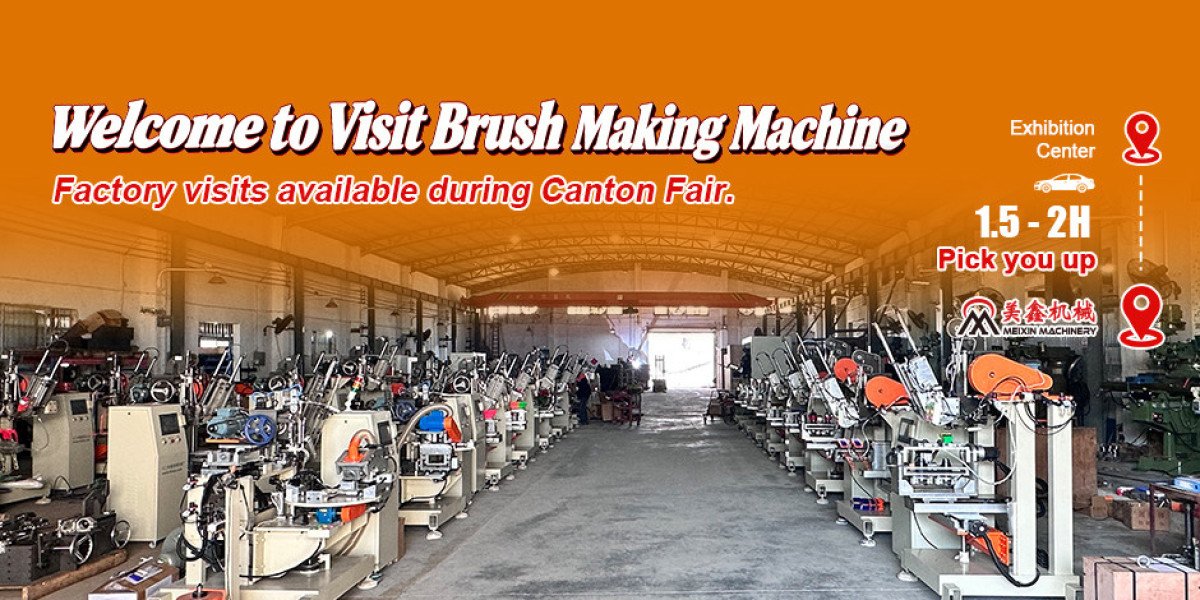

From household cleaning tools to industrial applications, brushes are essential in daily life and business operations. As competition increases, manufacturers must adopt advanced technologies that enhance production efficiency, improve product quality, and reduce overall operational costs.
Automation has become the backbone of modern brush production. Advanced machines now handle multiple stages of manufacturing, including drilling, tufting, trimming, and finishing. These processes are controlled by CNC systems and servo motors, ensuring high precision and consistency. By reducing manual intervention, manufacturers can achieve faster production cycles and minimize errors, resulting in more uniform and reliable products.
One of the key advantages of modern machinery is scalability. Businesses can easily increase production capacity without significantly increasing labor costs or operational complexity. Automated systems allow continuous production with minimal supervision, making it possible to fulfill large orders efficiently. This is especially important for companies supplying international markets, where timely delivery and consistent quality are critical for maintaining customer trust.
For entrepreneurs and established manufacturers alike, choosing the right equipment is a strategic decision that directly impacts business success. Investing in a reliable household brush making machine for sale can provide a strong foundation for efficient and profitable production. These machines are specifically designed for household brush manufacturing and offer advanced automation features that simplify operation while ensuring precision and consistency.
Flexibility is another major benefit of modern brush making machines. Manufacturers are no longer limited to producing a single type of brush. With adjustable settings and programmable controls, these machines can produce a wide variety of products, including cleaning brushes, toilet brushes, and specialty household tools. This versatility allows businesses to diversify their product lines and quickly adapt to changing market demands.
Cost efficiency is also a major factor driving the adoption of automated manufacturing solutions. While the initial investment in advanced machinery may be significant, the long-term benefits are substantial. Reduced labor costs, minimal material wastage, and improved production efficiency all contribute to higher profit margins. In addition, energy-efficient systems help lower operational expenses, making production more sustainable and environmentally friendly.
Another critical element for successful operations is reliable after-sales support. Leading machinery suppliers provide installation assistance, operator training, and ongoing technical maintenance services. This ensures that businesses can operate smoothly and minimize production downtime. Strong technical support also helps extend machine lifespan and maintain consistent performance over time.
Technological innovation continues to shape the future of brush manufacturing. Smart monitoring systems, automated calibration, and real-time production tracking are becoming standard features in modern machines. These advancements allow manufacturers to optimize production processes, reduce errors, and maintain high-quality output even at large-scale operations.
In conclusion, the brush manufacturing industry is evolving rapidly due to automation and technological advancement. Businesses that invest in modern machinery gain improved efficiency, reduced costs, and enhanced product quality. By adopting innovative solutions, manufacturers can achieve sustainable growth and remain competitive in the expanding global market.