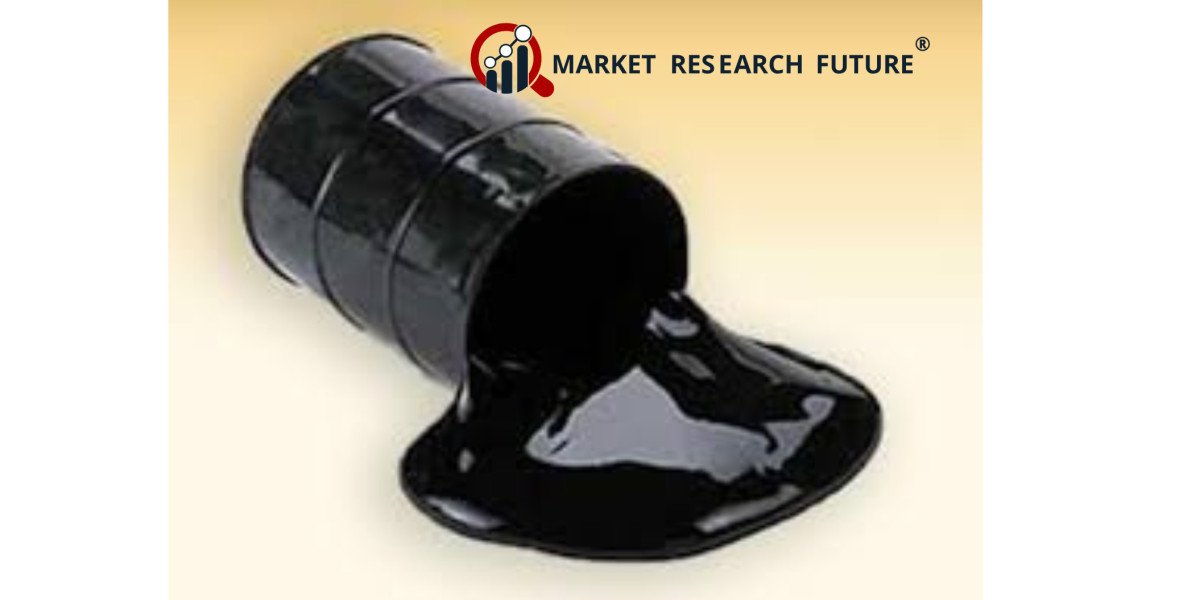

The petroleum pitch market is on a trajectory towards significant expansion, with projections indicating a market size reaching approximately USD 1.36 billion by 2035. This represents a compound annual growth rate (CAGR) of 5.3% from a base of USD 771.32 million in 2024. Key factors driving this growth include increasing industrial applications, particularly in North America, which remains the largest market. Emerging trends point to a growing demand for sustainable materials, enhancing the appeal of petroleum pitch across various sectors. As industries adapt to regulatory pressures favoring eco-friendly alternatives, the market dynamics are set to shift considerably, aligning with global sustainability goals.
The current landscape of the petroleum pitch market is shaped by a few dominant players. Leading market participants include Koppers Inc (US), Mitsubishi Chemical Corporation (JP), and Pechiney (FR), each contributing to innovations and market penetration. The competition is intensifying, particularly as Shandong Yulong Petrochemical Co Ltd (CN) and Himadri Speciality Chemical Ltd (IN) continue to enhance their production capabilities. Recent developments suggest that companies are not only focusing on expanding production but are also investing in R&D to innovate formulations that meet diverse applications. Additionally, regulatory frameworks in various regions are forcing companies to adapt, creating both challenges and opportunities for players in the field. The development of petroleum pitch market size continues to influence strategic direction within the sector.
Drivers fueling the petroleum pitch market include rising demand for carbon black, known for its application in tires and industrial rubber products. This trend is particularly pronounced in North America, where manufacturing sectors are ramping up output to meet transportation demands. Regulatory support for sustainable materials further strengthens this growth trajectory, prompting companies to seek out petroleum pitch as a viable option for carbon-intensive products. However, the market does face challenges such as fluctuating raw material prices and increased scrutiny regarding environmental impact. For example, as industries transition to greener alternatives, traditional petroleum pitch may need to be re-evaluated in terms of its environmental footprint. This dual pressure creates a continuously evolving environment where companies must innovate to maintain relevance.
Geographically, North America remains at the forefront of the petroleum pitch market, driven by robust industrial applications and manufacturing demand. According to Market Research Future, the region’s market size is projected to be significant, bolstered by established automotive and construction sectors. In contrast, the Asia-Pacific region is emerging swiftly, characterized by a CAGR exceeding that of North America. Nations like China, with companies such as Jiangsu Guotai International Group (CN), are expanding their operations to cater to the increasing demand for innovative materials and sustainable solutions. This regional analysis reveals contrasting dynamics where established markets in North America are juxtaposed against rapidly developing ones in Asia-Pacific, creating a complex competitive landscape.
Investment opportunities abound, particularly as the market shifts towards sustainable practices. Industries are increasingly looking for materials that align with environmental standards, leading to potential partnerships that could reshape the market dynamics. Players like C-Chem Co Ltd (JP) are likely to pursue collaborations that enhance product offerings while meeting sustainability criteria. Additionally, the introduction of new technologies in refining processes may open avenues for producing high-quality petroleum pitch at lower environmental costs. These investment opportunities are critical as businesses seek to innovate to stay competitive in a landscape characterized by rapid change. The development of Petroleum Pitch Market continues to influence strategic direction within the sector.
Recent market analysis indicates that the global petroleum pitch market is witnessing a notable shift, with the electric vehicle (EV) industry playing a crucial role. The growing adoption of EVs is projected to increase demand for lighter, more efficient materials, including petroleum pitch, which is used in the production of certain battery components and lightweight composites. For instance, as of 2023, the EV market accounted for approximately 10% of total vehicle sales worldwide, and this percentage is expected to reach 30% by 2030. This surge presents a significant opportunity for petroleum pitch producers to innovate and capture market share within the expanding EV segment.
Moreover, with an increasing emphasis on sustainability, companies that can adapt their production methods to reduce carbon emissions will likely gain a competitive advantage. For example, a recent study highlighted that firms implementing cleaner production technologies could reduce their operational costs by up to 20%, while also appealing to environmentally conscious consumers. As the petroleum pitch market evolves, those players that invest in greener alternatives and leverage technological advancements will be best positioned to thrive in an increasingly competitive environment.
Looking ahead to 2035, the future outlook for the petroleum pitch market suggests continued growth, driven by technological advancements and an increasing shift towards sustainable materials. Experts predict that as industries adapt, the market will not only expand in terms of size but also in complexity, with varied applications emerging across sectors. The anticipated market share of petroleum pitch in the overall materials segment is expected to rise, reflecting its utility in advanced applications. A report published by Market Research Future indicates that strategic investments in technology and sustainability practices will be key to unlocking the full potential of this market.
Browse for more reports: