
Alzheimer’s Therapeutics Market to Reach USD 11.86 Billion by 2032 Amid Breakthrough Drug Innovations
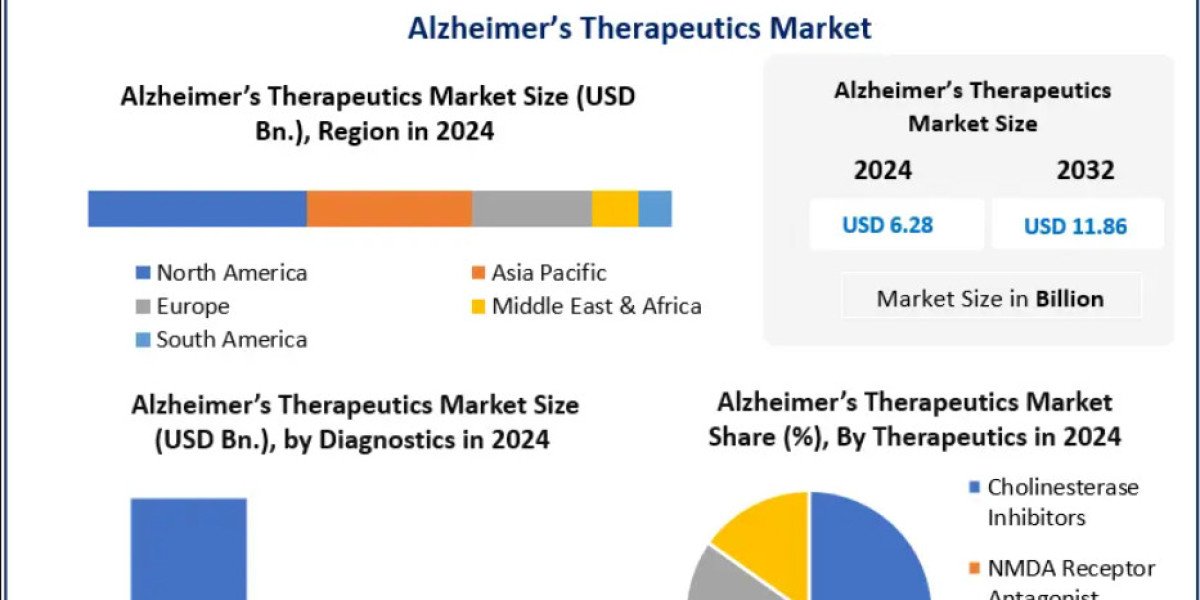
The global Alzheimer’s Therapeutics Market is undergoing a transformative phase, fueled by rising disease prevalence and significant advancements in drug development. Valued at USD 6.28 billion in 2024, the market is projected to reach nearly USD 11.86 billion by 2032, expanding at a CAGR of 8.27%.
Understanding Alzheimer’s Disease and Market Growth
Alzheimer's disease is a progressive brain disorder that leads to memory loss, cognitive decline, and behavioral changes. With aging populations increasing worldwide, the number of Alzheimer’s patients continues to surge—creating urgent demand for effective diagnostics and therapies.
However, despite the growing burden, only about one in four cases is diagnosed, highlighting a significant gap and opportunity in early detection and treatment.
Get A Free Sample Report Now:https://www.maximizemarketresearch.com/request-sample/164747/
Key Growth Drivers: Biomarkers and Early Diagnosis
One of the strongest drivers of the market is the growing use of biomarkers in diagnosing and developing Alzheimer’s therapies. Biomarkers such as beta-amyloid and tau proteins are helping clinicians detect the disease at early stages, improving treatment outcomes.
Innovations in:
- Cerebrospinal fluid (CSF) testing
- Blood-based biomarkers
- AI-powered imaging technologies
are significantly enhancing diagnostic accuracy and accelerating drug development pipelines.
Rising Demand for Disease-Modifying Therapies
The market is shifting from symptom management toward disease-modifying therapies (DMTs) that target the root causes of Alzheimer’s. Leading pharmaceutical companies such as:
- Biogen
- Eli Lilly and Company
- Roche Holding AG
are focusing on anti-amyloid and anti-tau therapies, aiming to slow or halt disease progression.
Notably, drugs like Lecanemab and Aducanumab have brought both optimism and controversy, reflecting the complex nature of Alzheimer’s treatment innovation.
Market Challenges: High Failure Rates in Clinical Trials
Despite promising advancements, the Alzheimer’s therapeutics market faces significant hurdles. Clinical trial failure rates remain high, particularly for late-stage disease-modifying drugs.
Several high-profile setbacks—including discontinued trials for potential blockbuster drugs—highlight:
- Complexity of disease mechanisms
- Difficulty in measuring clinical outcomes
- Long development timelines and high costs
These challenges continue to impact investor confidence and slow market growth.
Segment Insights: Cholinesterase Inhibitors Lead
Among therapeutic segments, cholinesterase inhibitors dominate the market, accounting for approximately 68% share in 2024. These drugs help manage symptoms by improving neurotransmitter levels in the brain.
Commonly used medications include:
- Donepezil
- Rivastigmine
- Galantamine
While these drugs do not cure Alzheimer’s, they remain essential for symptom control in mild to moderate stages.
Get A Free Sample Report Now:https://www.maximizemarketresearch.com/request-sample/164747/
Regional Outlook: North America Leads the Market
North America holds the largest market share (around 38%), driven by:
- High disease prevalence
- Strong R&D investments
- Advanced healthcare infrastructure
The United States remains the dominant contributor, with millions of patients affected and numbers expected to rise sharply in the coming decades.
Europe follows closely, while Asia-Pacific is emerging as a high-growth region due to increasing awareness, improving healthcare systems, and rising geriatric populations.
Emerging Trends Shaping the Market
Key trends transforming the Alzheimer’s therapeutics landscape include:
- Shift to precision medicine: Personalized treatments based on genetic and biomarker profiles
- AI-driven drug discovery: Faster identification of potential therapies
- Increased regulatory focus: Accelerated approvals with conditional pathways
- Expansion of early-stage intervention: Treating patients before severe symptoms appear
Competitive Landscape: Innovation at the Core
The market is highly competitive, with major players investing heavily in R&D and strategic collaborations. Key companies include:
- Novartis AG
- Pfizer Inc.
- Takeda Pharmaceutical Company Ltd
- AstraZeneca plc
- Sun Pharmaceutical Industries Ltd
These firms are focusing on next-generation therapies, including immunotherapies and neuroprotective drugs.
Future Outlook
The Alzheimer’s therapeutics market is entering a new era marked by scientific breakthroughs and growing global urgency. While challenges such as trial failures and regulatory complexities persist, the shift toward early diagnosis, biomarker-driven research, and disease-modifying therapies is expected to reshape the industry.
As innovation accelerates, the market holds strong potential to not only grow financially but also significantly improve patient outcomes worldwide.