
Market Overview
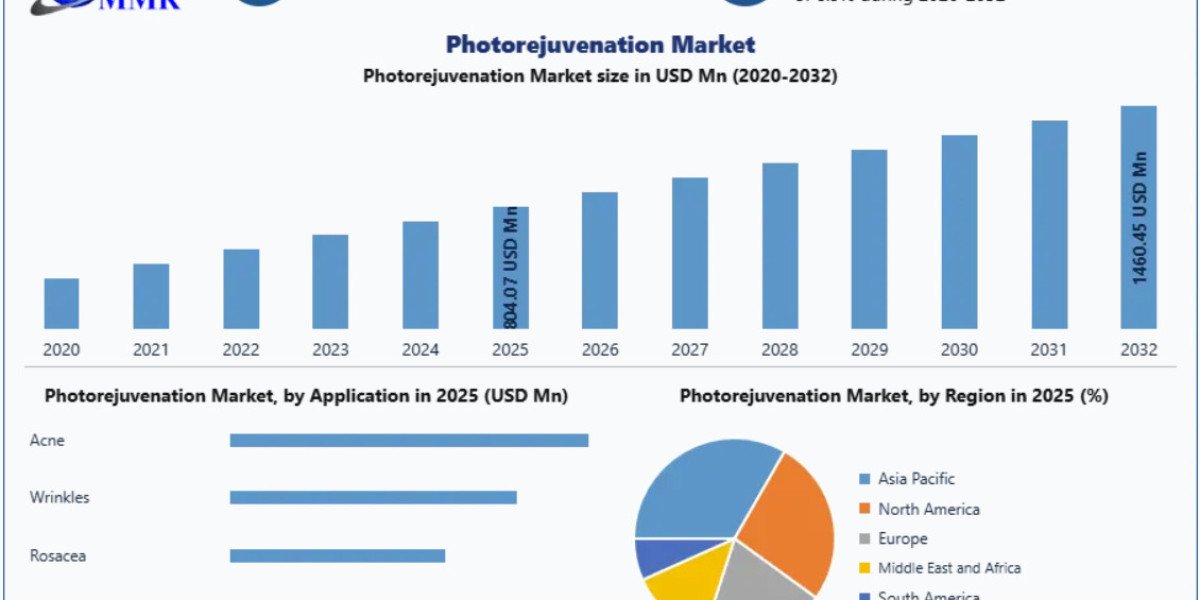
The global photorejuvenation market is experiencing significant expansion, fueled by rising awareness of aesthetic procedures and the growing preference for minimally invasive cosmetic treatments. This technique utilizes light-based technologies, including lasers and intense pulsed light (IPL), to enhance skin texture, minimize wrinkles, and address pigmentation concerns. The market is projected to maintain steady growth from 2026 to 2032, driven by continuous technological innovations, increasing disposable income levels, and a heightened focus on personal appearance. As highlighted by Maximize Market Research, the adoption of advanced dermatological solutions is accelerating market growth across both developed and emerging regions.
Access the Future of Market Strategy: [Download the Exclusive Sample Collection Kits Handbook & Data Summary Here] @ https://www.maximizemarketresearch.com/request-sample/106258/
Market Dynamics
Increasing Prevalence of Skin Problems Among People to Boost Market Growth
The increasing occurrence of skin conditions such as acne scars, pigmentation issues, sun damage, and visible signs of aging is a key driver of the photorejuvenation market. Factors like rising pollution, unhealthy lifestyle habits, and extended exposure to harmful UV rays have led to a growing number of people facing skin-related concerns. Moreover, the expanding aging population worldwide is further boosting the demand for anti-aging solutions. As individuals continue to look for reliable and long-lasting skin rejuvenation options, photorejuvenation technologies are becoming increasingly popular among consumers.
Growing Preference of People Towards Non-Invasive Procedures to Boost Market Growth
The increasing preference for non-invasive and minimally invasive cosmetic procedures is a significant factor driving market growth. Consumers are leaning toward treatments that deliver fast results, require little recovery time, and carry fewer risks than surgical options. Photorejuvenation offers a safe, efficient, and convenient solution, making it especially attractive to working professionals and younger individuals. This trend is further strengthened by continuous advancements in laser and intense pulsed light (IPL) technologies, which improve both treatment effectiveness and patient comfort.
Market Trends
The photorejuvenation market is experiencing several notable trends. The integration of advanced technologies such as AI-assisted diagnostics and precision laser systems is improving treatment outcomes. Additionally, the rising popularity of at-home photorejuvenation devices is expanding the consumer base. Clinics are also adopting multi-functional devices that offer a range of skin treatments, increasing operational efficiency. Social media influence and celebrity endorsements are further boosting awareness and adoption of aesthetic procedures globally.
Market Restraints
High Costs of Photorejuvenation Treatment
Despite strong growth potential, the high cost of photorejuvenation treatments remains a significant barrier. Advanced equipment and skilled professionals required for these procedures contribute to higher treatment costs, making them less accessible to price-sensitive consumers. In developing regions, limited insurance coverage for cosmetic treatments further restricts market growth. As a result, affordability remains a key challenge for widespread adoption.
Market Segment Analysis
By Product
The market is divided into laser-based devices, intense pulsed light (IPL) systems, and LED-based equipment. Laser-based devices hold the largest share due to their high accuracy and effectiveness in addressing various skin concerns. Meanwhile, IPL devices are increasingly preferred for their versatility and relatively lower cost.
By Modality
In terms of modality, the market is segmented into standalone and portable devices. Portable devices are experiencing significant growth, driven by their ease of use and rising demand for at-home treatments. However, standalone systems remain widely used in professional clinical environments.
By End-Users
The market caters to dermatology clinics, beauty centers, and home users. Dermatology clinics account for the largest share, supported by access to advanced technologies and skilled practitioners. At the same time, the home-use segment is growing quickly due to the availability of convenient and easy-to-use devices.
Market Regional Insights
Competitive Landscape Analysis
The photorejuvenation market is highly competitive, with several global and regional players focusing on innovation, product development, and strategic partnerships. Companies are investing in research and development to introduce advanced technologies that enhance treatment outcomes and reduce side effects. Mergers, acquisitions, and collaborations are common strategies adopted to strengthen market position.
Market Competitive Landscape
The competitive landscape is characterized by the presence of established players as well as new entrants. Leading companies are emphasizing product differentiation, technological advancements, and geographic expansion. The introduction of multifunctional devices and cost-effective solutions is intensifying competition in the market.
Key Players
- Lumenis Ltd.
- Cutera, Inc.
- Alma Lasers
- Cynosure, LLC
- Syneron Medical Ltd.
- Fotona
- Venus Concept
- Sciton, Inc.
- Solta Medical
- Lutronic Corporation
Elevate Your Competitive Intelligence: > [Click to Access the Complete Sample Collection Kits Strategy Handbook and Data Summary] https://www.maximizemarketresearch.com/market-report/global-qr-code-labels-market/106258/
FAQ
1. What is photorejuvenation?
Photorejuvenation is a non-invasive cosmetic treatment that uses light-based technologies to improve skin texture and appearance.
2. What factors are driving market growth?
Key drivers include increasing skin problems, rising demand for non-invasive treatments, and technological advancements.
3. Which region dominates the market?
North America currently leads the market due to advanced infrastructure and high awareness.
4. What are the major challenges?
High treatment costs and limited affordability in developing regions are major restraints.
5. Who are the key players in the market?
Major players include Lumenis, Cutera, Alma Lasers, and Cynosure.