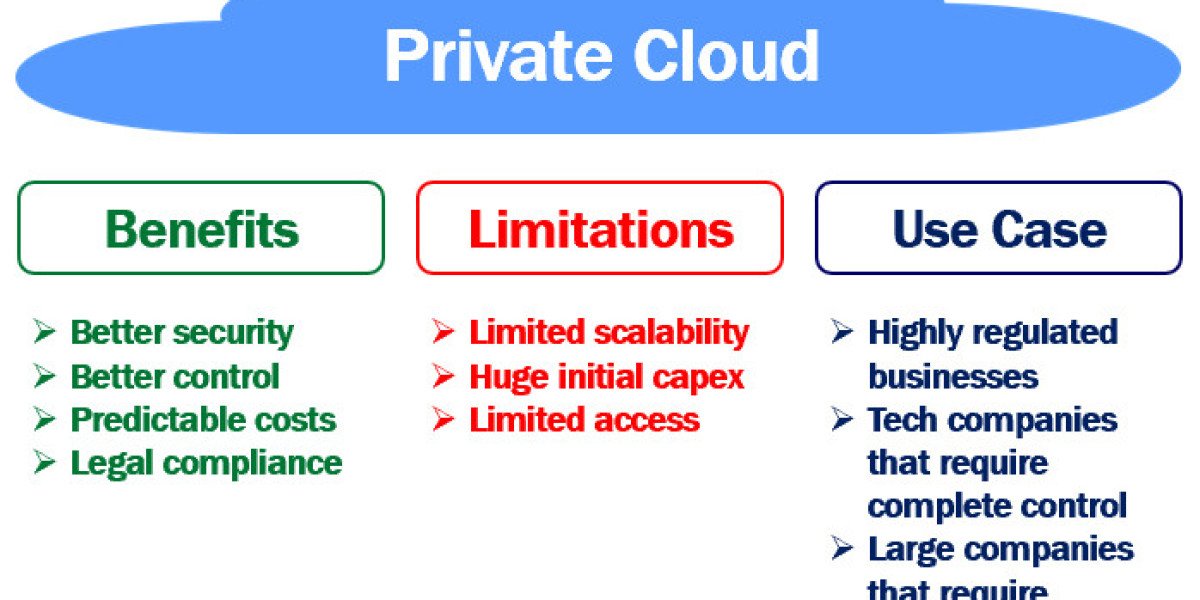

The dynamic and ever-evolving Private Cloud Services industry represents a critical segment of the broader cloud computing landscape, offering a dedicated and secure environment for organizations that prioritize control, security, and performance. Unlike the public cloud, which operates on a multi-tenant model where resources are shared among various customers, a private cloud is a single-tenant environment where the computing infrastructure is reserved exclusively for one organization. This fundamental difference is the cornerstone of the industry's value proposition. It provides the agility, scalability, and self-service capabilities characteristic of cloud computing, but within a private, isolated framework. This model is particularly compelling for enterprises in highly regulated sectors, government agencies, and businesses with stringent data sovereignty or mission-critical performance requirements. As organizations seek to balance the benefits of cloud innovation with the non-negotiable need for security and governance, the private cloud industry has solidified its position as an essential pillar of modern enterprise IT strategy, serving as a secure foundation for digital transformation.
The industry is comprised of a diverse ecosystem of providers and deployment models, catering to a wide range of organizational needs and technical capabilities. One major deployment model is the on-premises private cloud, where an organization owns, manages, and maintains the entire infrastructure within its own data center. This offers the absolute maximum level of control but also requires significant upfront capital investment (CapEx) and a highly skilled internal IT team. The alternative is the hosted or managed private cloud. In this model, a third-party provider owns and manages the dedicated hardware in its own data center, offering it to a single client "as a service." This shifts the economic model from CapEx to a more predictable operating expense (OpEx) and offloads the burden of infrastructure management, while still providing the core benefits of a dedicated, single-tenant environment. Key players in this space range from traditional hardware and software vendors like Dell Technologies, HPE, and VMware (now part of Broadcom), to specialized managed service providers like Rackspace and established tech giants like IBM and Oracle, all competing to offer the most robust and secure private cloud solutions.
The technological underpinnings of the private cloud services industry are sophisticated and constantly advancing to deliver a public cloud-like experience within a private setting. Virtualization remains the foundational technology, allowing for the abstraction of physical hardware into a flexible pool of virtual resources. On top of this, a robust management and orchestration layer is essential. This software stack, often powered by platforms like VMware vRealize Suite or open-source alternatives like OpenStack, provides the self-service portals, automated provisioning, and resource management capabilities that define the cloud experience. Increasingly, containerization technologies, particularly Kubernetes, are becoming integral to private cloud platforms. This allows organizations to build and run modern, cloud-native applications with greater portability and efficiency, ensuring that their private infrastructure can support the same cutting-edge development methodologies used in the public cloud. This focus on automation and modern application architecture is key to preventing the private cloud from becoming a rigid, legacy system.
Ultimately, the private cloud services industry is not positioned as an enemy of the public cloud, but rather as a crucial component of a broader hybrid cloud strategy. Few large enterprises today operate in a single cloud environment. The prevailing strategy is to place workloads in the most appropriate environment based on their specific requirements for security, performance, cost, and compliance. Mission-critical applications with sensitive data and predictable performance needs are ideal candidates for the private cloud, while less sensitive, highly variable workloads may be better suited for the public cloud. The industry's future is therefore inextricably linked to its ability to seamlessly integrate with public cloud environments. This involves providing unified management tools, consistent APIs, and easy data mobility between clouds, enabling organizations to build a cohesive and flexible hybrid infrastructure that combines the best of both worlds—the security and control of private with the scale and innovation of public.
Explore More Like This in Our Reports: