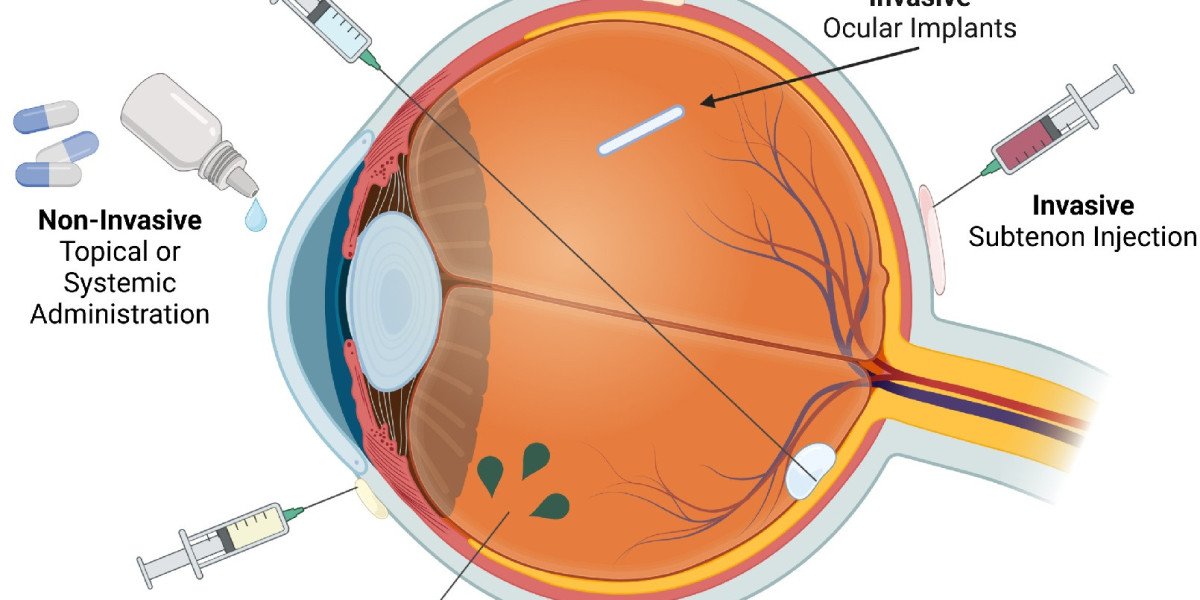

The global ocular drug delivery technology market is witnessing steady growth, driven by the increasing prevalence of vision-related disorders and advancements in drug delivery systems. Valued at US$ 16.3 Bn in 2023, the market is projected to reach US$ 30.2 Bn by 2034, expanding at a CAGR of 5.7%. As eye diseases become more common across aging populations and digital lifestyles, the need for efficient and targeted ocular therapies is more critical than ever.
Rising Burden of Vision Impairment
One of the primary factors fueling market growth is the rising incidence of vision impairment globally. According to the World Health Organization, over 2.2 billion people suffer from some form of vision impairment, with nearly half of these cases being preventable or treatable. Conditions such as glaucoma, cataracts, diabetic macular edema (DME), and dry eye syndrome are becoming increasingly prevalent, particularly among the elderly.
The growing geriatric population further amplifies this demand. As people age, they become more susceptible to chronic eye conditions that require long-term treatment. This has significantly increased the need for advanced ocular drug delivery technologies that can provide sustained and effective therapeutic outcomes.
Limitations of Conventional Eye Treatments
Traditional methods like eye drops, although widely used, suffer from low bioavailability and rapid drug washout. A large portion of the administered drug fails to reach the target site due to natural barriers in the eye, such as tear drainage and corneal resistance. This inefficiency has prompted the development of more advanced drug delivery systems that ensure better absorption and prolonged drug action.
Modern ocular drug delivery systems—including implants, gels, and inserts—are designed to overcome these limitations. These technologies enable controlled drug release, improved penetration, and reduced dosing frequency, ultimately enhancing patient compliance and treatment effectiveness.
Innovation Driving Market Growth
Innovation is at the heart of the ocular drug delivery technology market. One of the most promising developments is the emergence of smart contact lenses capable of delivering drugs directly to the eye over extended periods. These lenses not only improve drug retention but also enhance bioavailability, making them a game-changer in ophthalmic treatment.
In addition, advancements in nanotechnology are revolutionizing the field. Nanoparticles and nanomicelles are being increasingly used to improve drug solubility, stability, and targeted delivery. These technologies allow for sustained drug release and minimize side effects, offering a significant advantage over conventional therapies.
Another exciting trend is the integration of digital health technologies. Smart drug delivery systems equipped with sensors can monitor eye conditions in real time, enabling personalized treatment and early intervention.
Regional Insights
North America currently leads the global ocular drug delivery technology market, supported by strong research infrastructure and high healthcare spending. The presence of leading pharmaceutical companies and increasing cases of vision loss contribute to the region’s dominance.
Meanwhile, Asia Pacific is emerging as a high-growth region due to its rapidly aging population and rising prevalence of lifestyle diseases such as diabetes, which increases the risk of diabetic retinopathy. Countries like China and India are investing heavily in healthcare infrastructure, creating new opportunities for market expansion.
Competitive Landscape
The market is highly competitive, with companies focusing on innovation and strategic collaborations to strengthen their positions. Key players such as Ocular Therapeutix, Alimera Sciences, and Allergan are actively developing advanced drug delivery solutions.
Recent developments include the launch of new therapies for conditions like posterior uveitis and presbyopia, highlighting the industry’s commitment to addressing unmet medical needs.
Future Outlook
Looking ahead, the ocular drug delivery technology market is poised for sustained growth. Continuous advancements in biomaterials, nanotechnology, and smart devices are expected to redefine how eye diseases are treated. While regulatory challenges may pose some hurdles, the increasing focus on patient-centric care and precision medicine will continue to drive innovation.
In conclusion, as the global burden of eye diseases rises, ocular drug delivery technologies are playing a pivotal role in improving treatment outcomes and quality of life. The future of eye care lies in smarter, more efficient, and targeted drug delivery systems—ushering in a new era of ophthalmic innovation.
Source: https://www.transparencymarketresearch.com/ocular-drug-delivery-technologies.html
Contact:
Abhishek Budholiya
Transparency Market Research Inc.
State Tower, 90 State Street, Suite 700,
Albany NY - 12207, United States
Tel: +1-518-618-1030
USA - Canada Toll Free: 866-552-3453
Website: https://www.transparencymarketresearch.com
Media Inquiries: media@transparencymarketresearch.com
Sales Inquiries: sales@transparencymarketresearch.com